
Professional, clinically guided cosmetic whitening that prioritises your safety, oral health, and long-term results with complete transparency at every stage of the process.
A brighter smile can genuinely lift your mood and the way others see you — whether you are preparing for a significant life event or simply looking to feel more confident in everyday moments.
Professional tooth whitening is a clinician-supervised cosmetic treatment that, when matched to the right approach, produces reliable, well-managed results. Every journey begins with a thorough assessment of your oral health, the nature of your staining, and your personal goals. From there, a tailored pathway is designed around your specific needs — not a one-size-fits-all solution, but a considered clinical plan built with your long-term wellbeing in mind.
The information below provides a clear and practical guide to what professional whitening involves, who it suits, and what to realistically expect so that you can move forward with confidence and informed expectations.
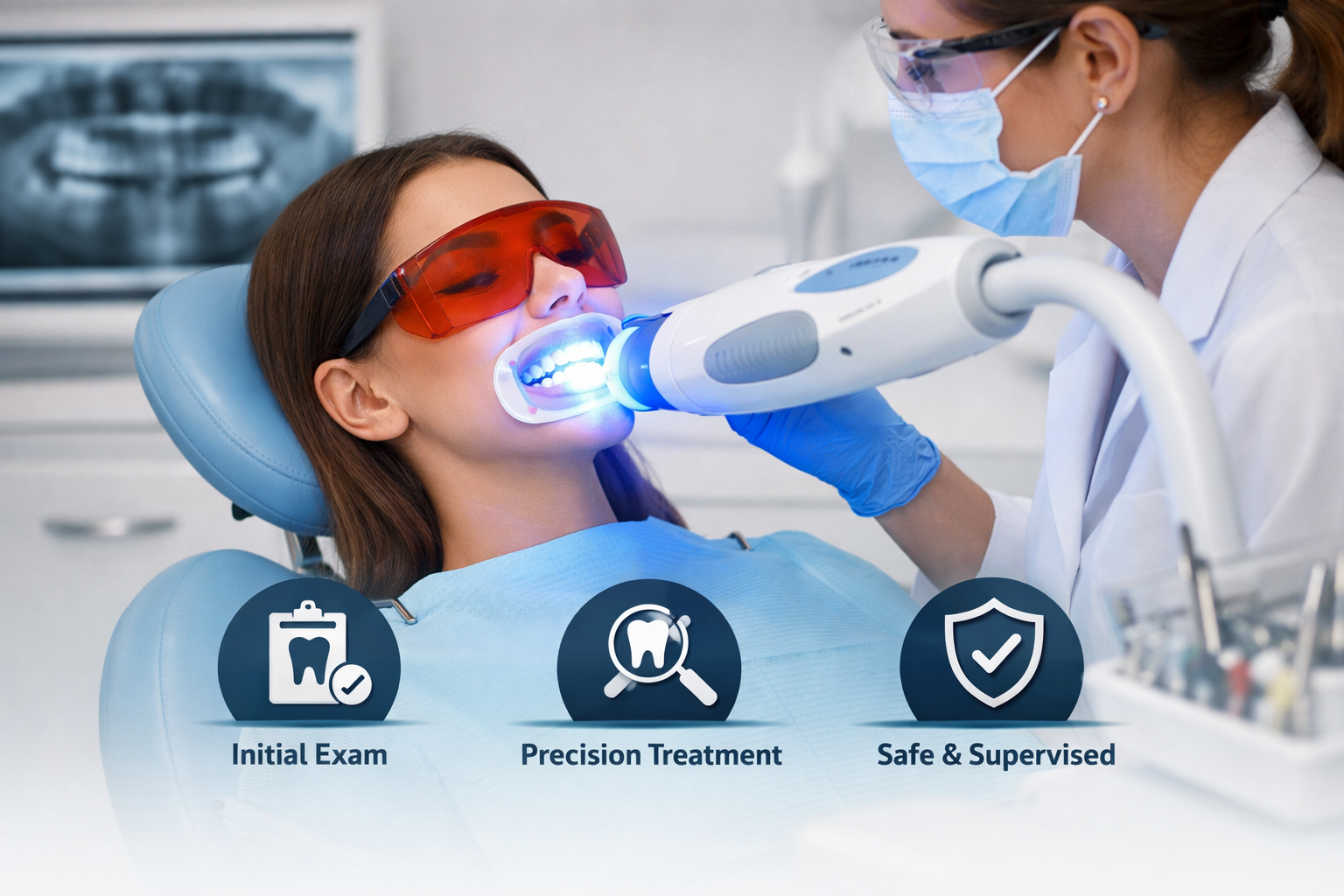
The difference between professional whitening and over-the-counter alternatives is not simply a matter of strength — it is a matter of safety, precision, and clinical accountability. Professional whitening begins with a formal assessment, a step that over-the-counter products cannot replicate. A qualified clinician evaluates the health of your teeth and gums, identifies the type of discolouration present, and determines whether whitening is appropriate in your specific case.
This assessment matters enormously. Active tooth decay, gum disease, exposed dentine, or certain types of deep staining require attention before whitening can safely proceed. Without this step, whitening agents can irritate compromised tissue, produce uneven results, or worsen existing sensitivity. Professional oversight eliminates these risks through structured planning and continuous monitoring throughout treatment.
In regulated professional settings, the concentrations of peroxide used are precisely calibrated for your individual sensitivity profile and the condition of your enamel. Protective measures are applied to soft tissue during in-clinic procedures, and clinicians can adjust protocols if any adverse response is detected. This level of control and responsiveness is simply not available from an unsupervised kit.
Clinical experience consistently demonstrates that supervised whitening produces more predictable outcomes, a better safety profile, and longer-lasting results than unsupervised approaches. For anyone seeking meaningful, responsible cosmetic improvement, professional guidance is not just preferable it is the responsible choice.
Professional tooth whitening uses carefully formulated peroxide-based agents typically hydrogen peroxide or carbamide peroxide to reduce the appearance of staining and restore a fresher, cleaner shade. In simple terms, these agents break down stain molecules within the tooth's enamel into smaller, less visible particles, causing the tooth to appear progressively lighter. The process does not alter the structure of the tooth itself; it works by gently addressing discolouration within and on the surface of the enamel.
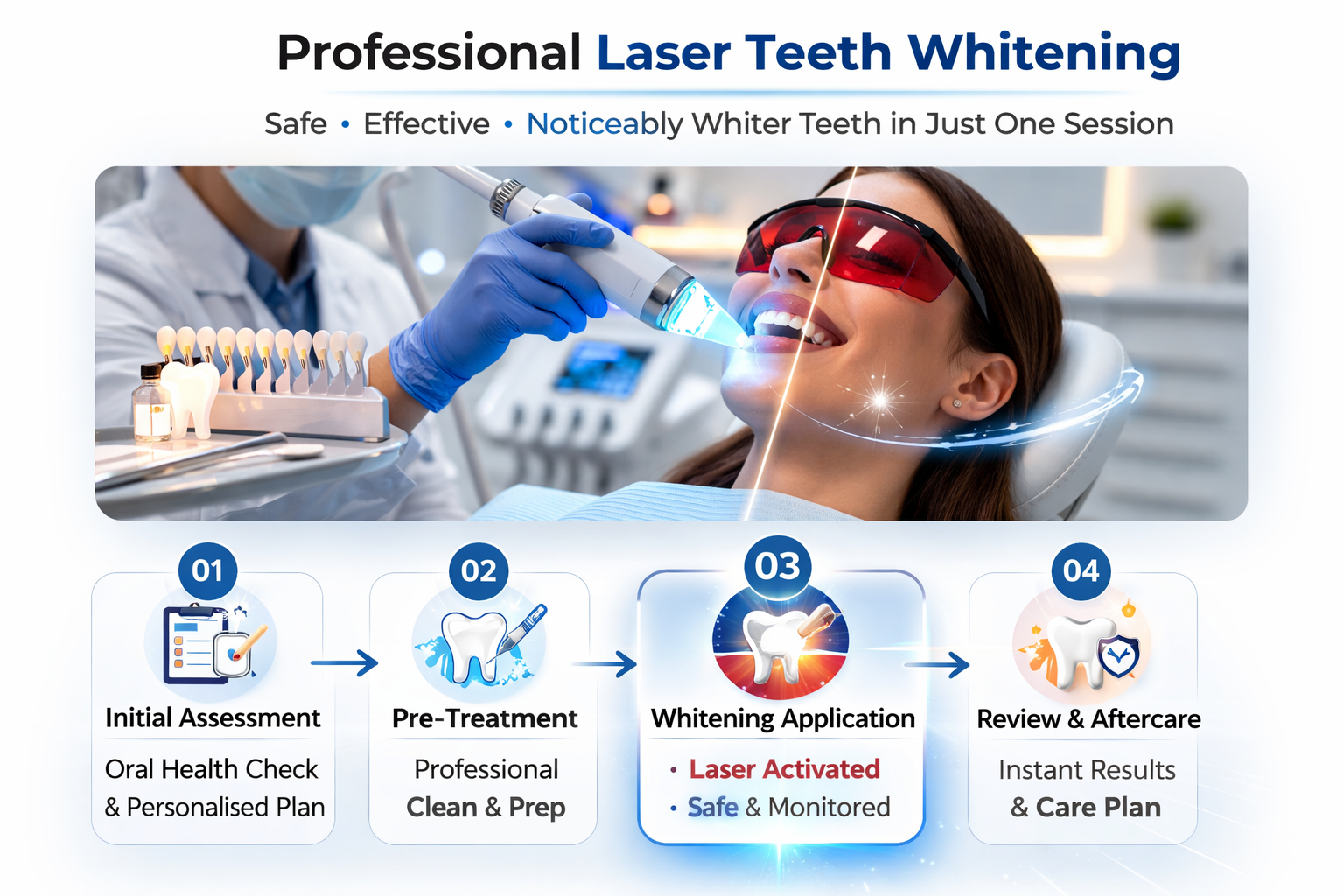
A comprehensive clinical review of your oral health, dental history, existing restorations, and the nature of your staining. Candidacy is confirmed and a personalised plan is established with realistic expectations clearly communicated.
Any necessary pre-treatment — such as a professional clean to remove surface deposits — is completed first. This ensures the whitening agent works evenly and effectively across the tooth surface from the outset.
The chosen whitening method is applied under clinical supervision. For in-clinic procedures, soft tissue barriers are carefully placed, and the process is monitored in full throughout the session for comfort and safety.
Immediate results are assessed, sensitivity is addressed if needed, and a structured aftercare plan is provided. Follow-up appointments or take-home maintenance may be recommended for optimal longevity of results.
Tooth whitening is an accessible option for many adults, but it is not universally appropriate without a prior clinical assessment. Understanding whether treatment is right for you is an essential first step one that a qualified dental professional will guide you through clearly and with honesty.
Adults with generally healthy teeth and gums, realistic expectations, and discolouration that is primarily extrinsic — caused by coffee, tea, red wine, tobacco, or natural age-related darkening — tend to respond very well to professional whitening treatment.
Active decay, untreated gum disease, thin enamel, or significant existing restorations may require attention before whitening can proceed. Those with extensive crowns, veneers, or composite fillings should understand that these materials do not respond to bleaching agents.
Pregnant or breastfeeding individuals are commonly advised to postpone whitening as a precautionary measure. Younger patients should await full dental development before beginning any whitening programme, as advised by a clinician.
Staining caused by trauma, certain antibiotics, or developmental conditions may respond less predictably to whitening. In these cases, alternative cosmetic options such as veneers or bonding may be discussed as part of a broader treatment plan.
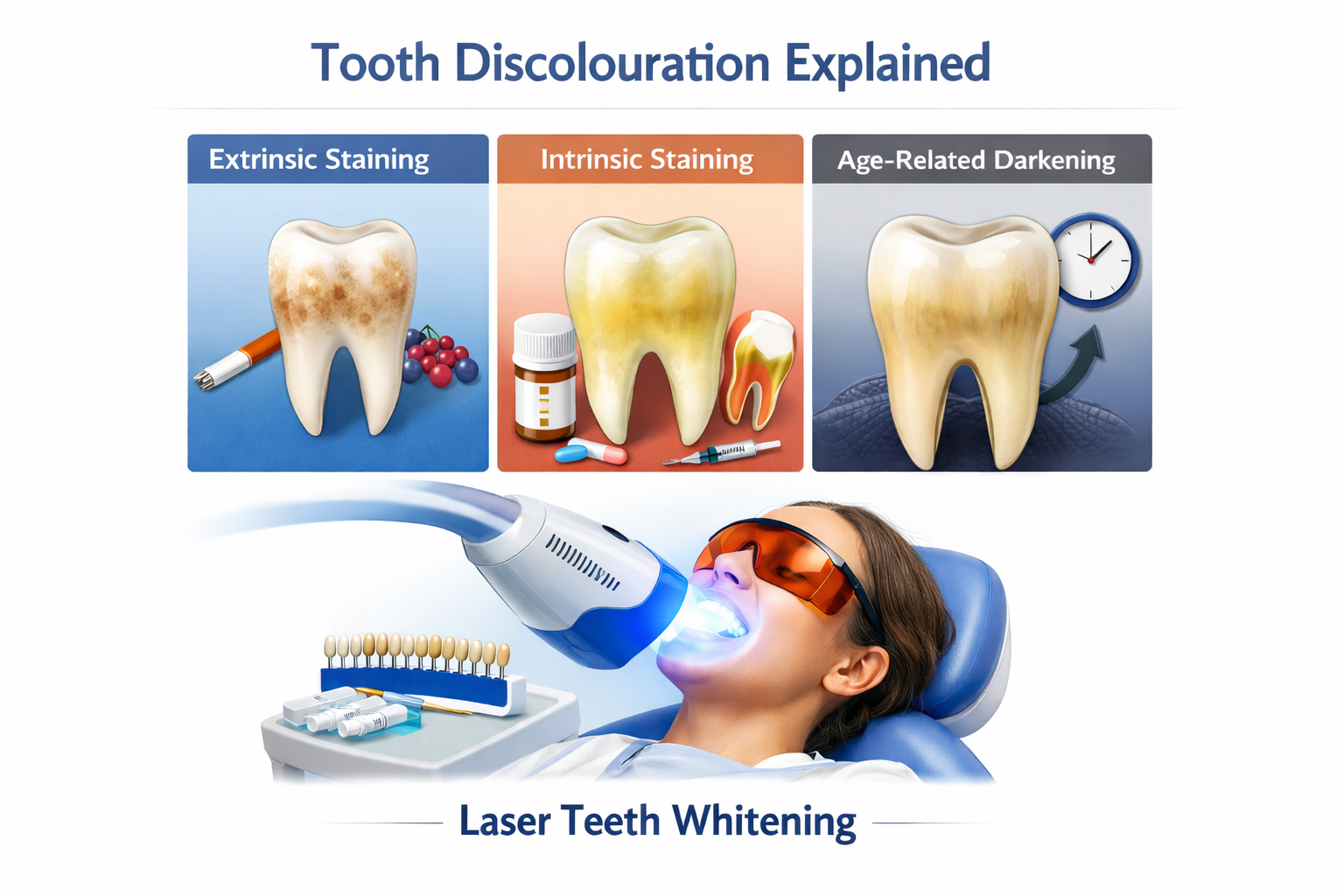
A clear understanding of the type of staining present is central to designing an effective whitening plan. Not all discolouration is the same, and different stain types respond very differently to treatment. Your clinician will assess this during your initial review so that expectations are realistic and results are achievable.
Extrinsic staining affects the outer surface of the tooth the enamel. These stains are caused by lifestyle factors such as the regular consumption of coffee, tea, red wine, or strongly coloured foods such as berries and curries. Tobacco use is also a significant contributor. Because these stains sit on and within the enamel surface, they typically respond very well to professional cleaning and whitening treatments. Noticeable improvement can often be achieved in a relatively short period, making extrinsic staining the most responsive type to whitening treatment.
Intrinsic staining occurs deeper within the tooth structure. These stains may develop as a result of natural ageing, trauma to the tooth, certain antibiotics taken during early tooth development such as tetracycline or other internal changes to the dentine. Because intrinsic stains are not located simply on the surface, they can be more challenging to address with peroxide-based whitening alone. Results may be more gradual, and in some cases alternative or complementary cosmetic approaches may be discussed to achieve the desired outcome effectively.
As teeth age, the enamel naturally becomes thinner and the underlying dentine which is naturally more yellow becomes more visible. This gradual darkening is a normal part of ageing and often responds well to professional whitening, particularly when the underlying enamel remains in good condition. A clinical assessment will determine the extent to which whitening can realistically address age-related discolouration in any individual case.
Professional tooth whitening commonly falls into three main categories, each with distinct advantages depending on your goals, timeline, and sensitivity profile. Your clinician will assess which option or which combination is most appropriate for you based on your individual clinical picture and desired outcome.
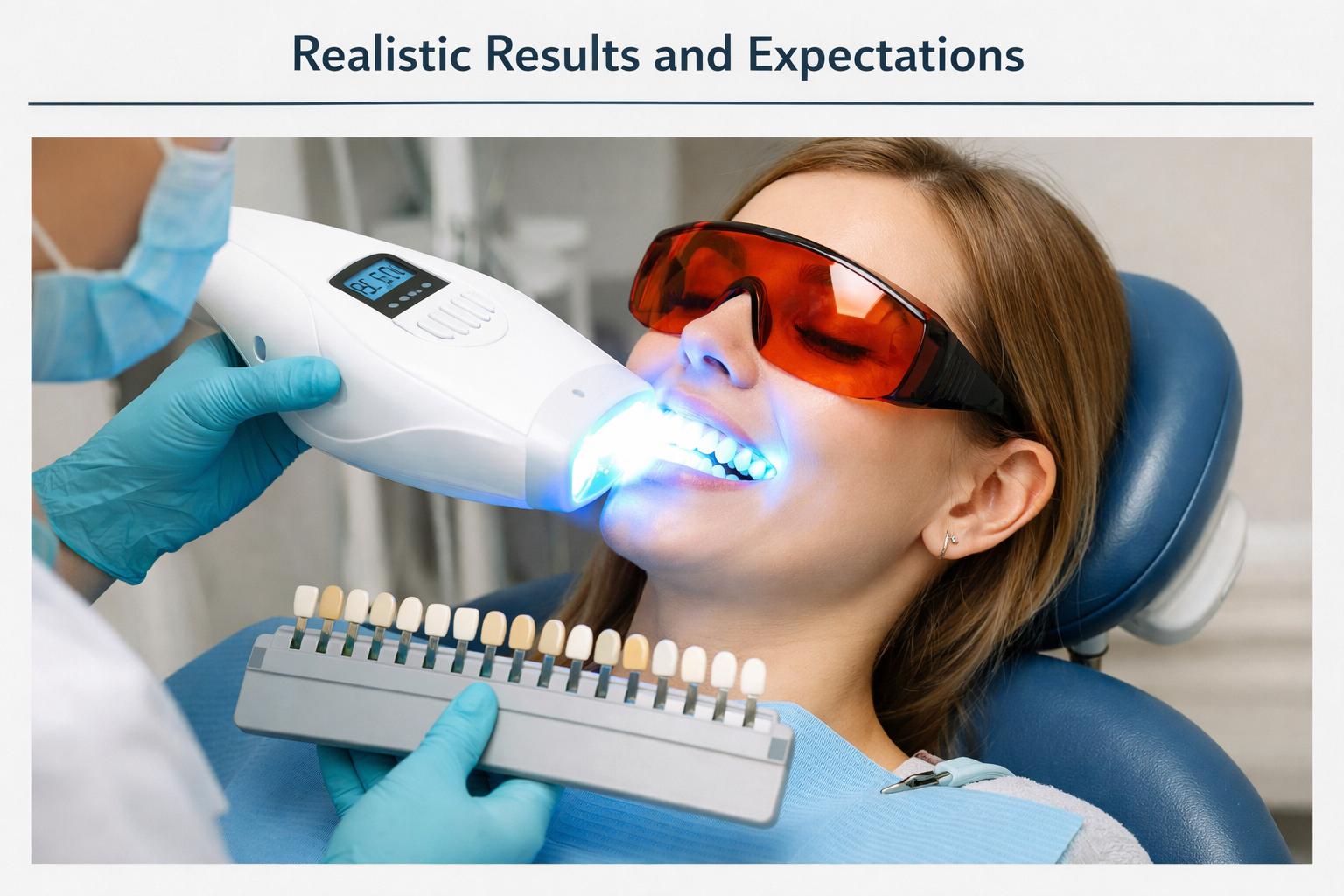
Professional whitening reliably improves the appearance of natural tooth enamel, particularly for extrinsic staining. However, it is important to approach the process with informed and realistic expectations. Whitening enhances your natural tooth colour it does not produce an artificial, opaque white appearance. The goal is a refreshed, brighter smile that remains natural-looking and flattering to your individual facial tone and personal preferences.
Existing restorations including crowns, veneers, and composite fillings do not change colour in response to whitening agents. Where these are present, your clinician will discuss options to achieve a more uniform appearance, which may include replacing restorations to more closely match the new shade of your natural teeth.
Results vary depending on diet, lifestyle habits, and oral hygiene practices. In general, whitening effects commonly last between several months and a few years. Individuals who avoid heavily staining foods and drinks, who do not smoke, and who maintain a thorough oral hygiene routine tend to enjoy longer-lasting results over time.
Periodic top-up treatments either professionally supervised or through short home-maintenance sessions using clinician-provided materials can help sustain the achieved shade. Your clinician will advise the most appropriate maintenance schedule for your individual situation and lifestyle.
In-clinic whitening commonly produces the fastest visible change, with results often apparent immediately after the session. Take-home systems progress more gradually, with optimal results typically achieved after the full prescribed course. The degree of improvement depends on the nature and depth of the staining, the starting shade, and individual response to treatment all factors your clinician will assess at the outset.
When carried out under appropriate clinical supervision, professional tooth whitening is considered safe for individuals with healthy teeth and gums. The foundation of safe whitening lies in accurate diagnosis, careful preparation, controlled application, and continuous monitoring all of which are integral to professionally delivered care and cannot be replicated by unsupervised approaches.
The most commonly reported side effect is temporary sensitivity, which typically settles within a few days to weeks. Clinicians manage this through adjusted application times, precise concentration selection, and desensitising products where appropriate.
Mild gum irritation can occur if whitening gel contacts soft tissue. In professional settings, physical barriers are applied during in-clinic procedures to protect the gums, lips, and cheeks from direct exposure to the whitening agent.
When used correctly under professional guidance, whitening does not damage healthy enamel. Correct concentrations and exposure times are carefully selected by the clinician to protect the structural integrity of the tooth throughout the treatment.
Crowns, veneers, and composite fillings do not respond to bleaching agents. A thorough pre-treatment assessment prevents unexpected colour differences and allows planning for restoration replacement where a more uniform appearance is desired.
Professional supervision enables real-time adjustment of treatment protocols. If any adverse response is detected, clinicians can intervene promptly — a critical safeguard that is entirely absent from unsupervised over-the-counter whitening approaches.
Treatments are carried out by registered dental professionals specifically trained in concentration selection, controlled application techniques, risk management, and the prevention and management of sensitivity and soft tissue irritation.
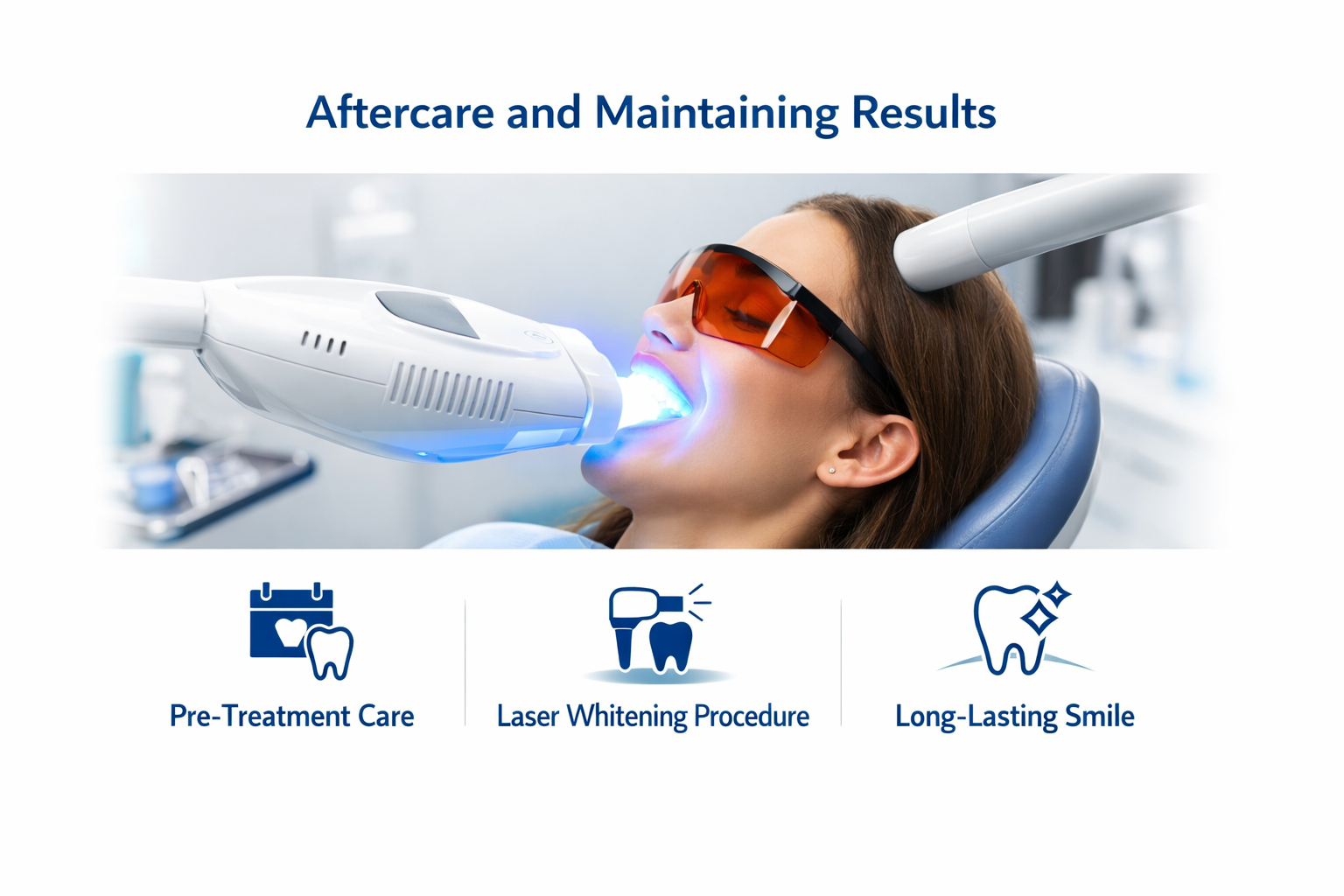
Effective aftercare plays a significant role in both the comfort of your recovery and the longevity of your results. Your clinician will provide detailed, personalised guidance based on the method used and your individual response to treatment.
Before beginning whitening, it is advisable to complete any recommended dental treatment such as fillings or gum care to ensure the process is both safe and effective. In the 24 to 48 hours before an in-clinic session, limiting the consumption of heavily staining foods and drinks helps your clinician assess your true starting shade accurately. If you have a history of tooth sensitivity, informing the clinician in advance allows the protocol to be adapted accordingly before treatment begins.
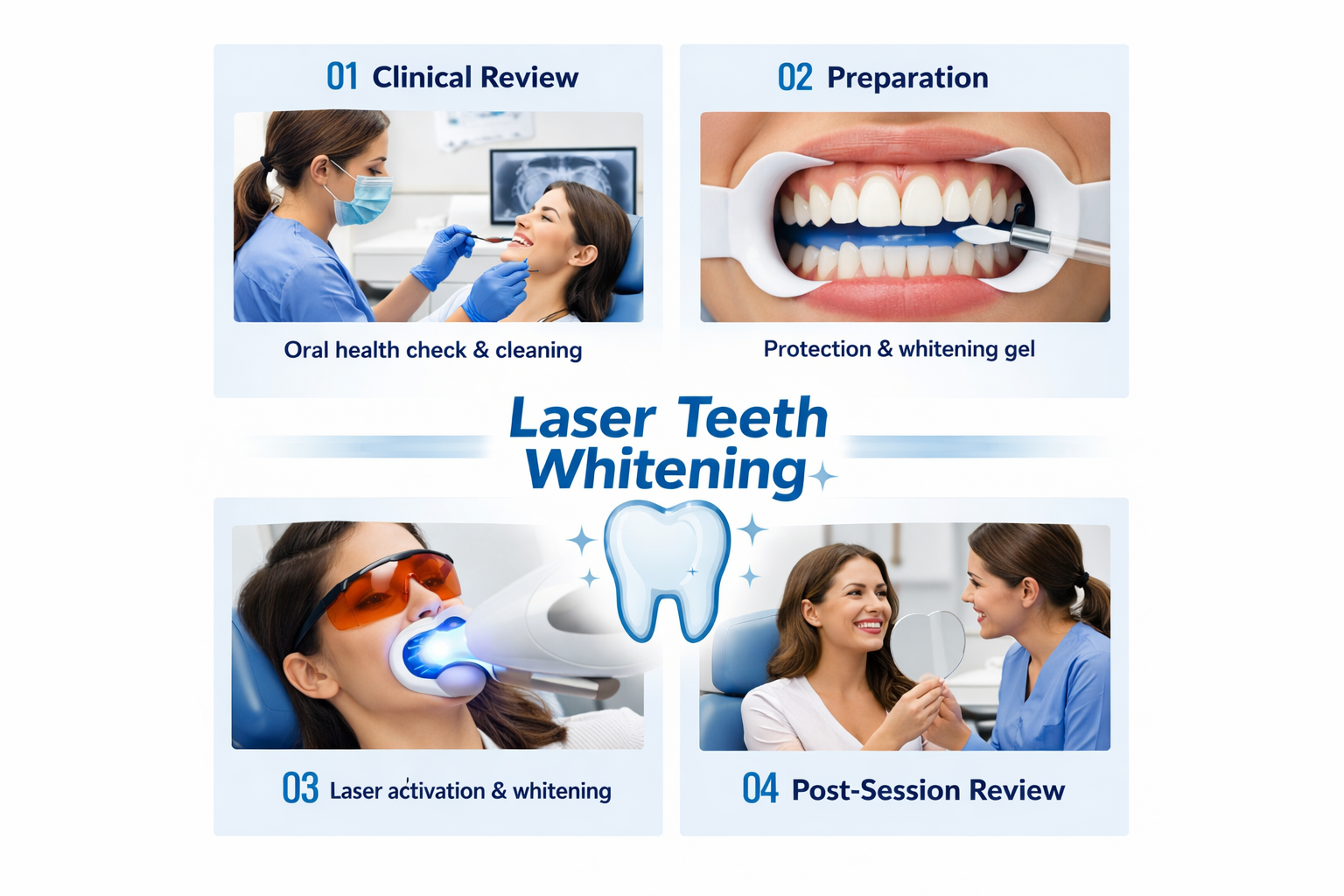
A professional whitening appointment is designed to be calm, comfortable, and clearly communicated at every stage. The following provides a general outline of what a typical in-clinic visit involves, so patients can attend with a clear and reassuring understanding of what to expect from the process.
The appointment begins with a brief confirmation of oral health, a review of existing restorations, and a check on sensitivity history. Any surface deposits are removed with a professional clean if required, as a clean surface supports more even whitening chemistry.
The clinician isolates the gums and applies protective barriers to soft tissue. The whitening agent is then carefully applied to the teeth. Patients have the opportunity to discuss their target shade within clinically reasonable parameters before treatment proceeds.
Where a light or activation source is used, the clinician monitors application times and checks on comfort throughout. The session is conducted at a measured pace, with adjustments made as needed to ensure the process remains comfortable and well-controlled.
At the close of the session, the clinician assesses the immediate result and provides guidance on sensitivity management and immediate aftercare. If take-home trays form part of the plan, they are fitted at this stage with clear instructions for home use.
Beyond the visible cosmetic improvement, many people report a meaningful boost in confidence following professional whitening a greater readiness to smile in photographs, social settings, and professional environments. These personal benefits, though individual in nature, are a valued dimension of the outcome that clinician-supervised care helps to support and deliver.
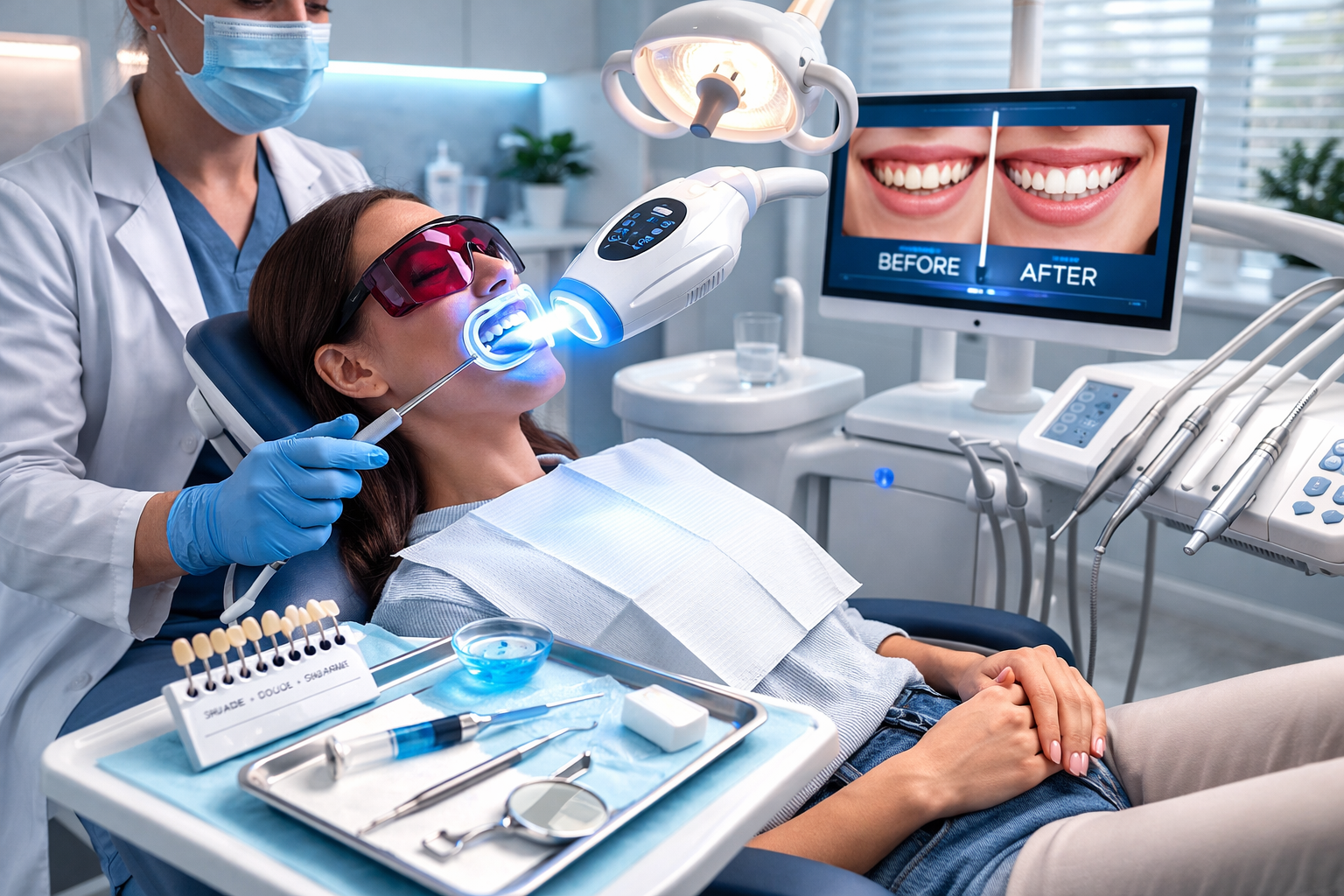
Professional whitening in a clinical setting is guided by a clear set of values: honesty, safety, and a commitment to outcomes that serve long-term oral health — not simply a short-term cosmetic objective. Every aspect of the process, from initial assessment through to ongoing maintenance, is shaped by these principles.
No whitening programme should begin without a comprehensive clinical evaluation. This protects both oral health and the integrity of results. Understanding individual candidacy is the non-negotiable foundation of responsible, patient-centred care.
Clinicians take time to explain realistic outcomes before treatment begins. Setting honest expectations about the degree of improvement possible, the nature of any sensitivity, and the longevity of results is central to a positive and trustworthy patient experience.
No two patients are the same. Concentration levels, application schedules, and aftercare recommendations are individually calibrated to match specific sensitivity profiles, enamel conditions, and personal aesthetic goals — never applied as a generic solution.
The relationship between clinician and patient does not end at the conclusion of a session. Follow-up monitoring, maintenance guidance, and access to clinical advice throughout the process are integral parts of professional, responsible whitening care.
Professional tooth whitening, when delivered under the guidance of a qualified dental clinician, is a safe, effective, and meaningful cosmetic treatment. It offers a way to address the natural effects of ageing, lifestyle, and daily habits on the appearance of your teeth with the protection of expert supervision, clinical precision, and structured aftercare at every stage of the journey.
The key to a successful outcome lies in the quality of the assessment that precedes it, the appropriateness of the treatment selected for the individual, and the commitment to responsible aftercare that follows. A clinician who takes the time to understand your specific oral health, sets honest and achievable expectations, and provides ongoing support throughout the process is the most valuable element in achieving results you will be genuinely pleased with.
If you value clinician-led care, clear evidence-aware information, and an approach that places your long-term oral wellbeing above short-term cosmetic convenience, speaking to a registered dental professional is the right and most responsible place to begin.